





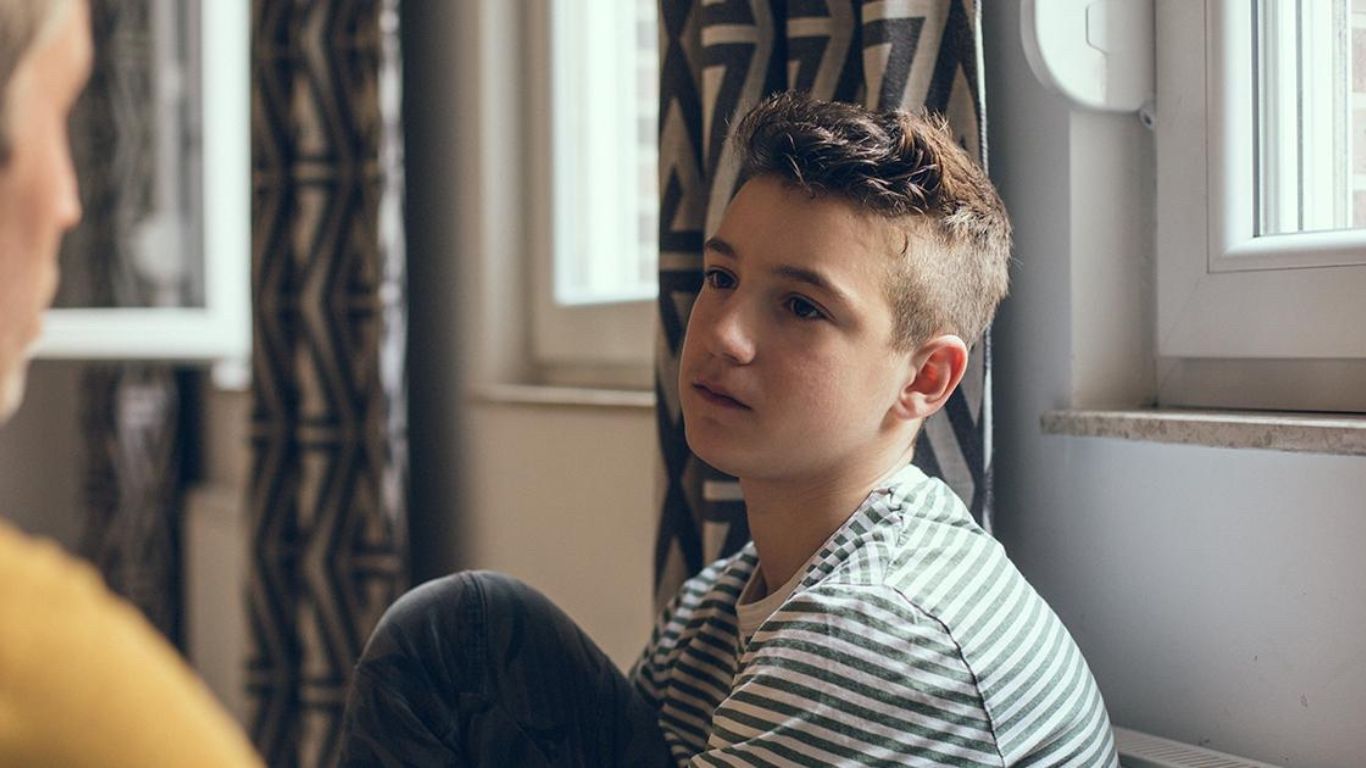
You sense something is wrong.
Your son doesn’t seem like himself.
The school emailed you: assignments are missing.
He pulls away when you go to hug him.
Conversations are prickly and it feels like walking on eggshells.
You’ve thought about checking his phone messages. You worry your son could be in trouble but every time you try to talk to him lately, he withdraws even more. You knock on his door:
Mom: “Danny, is everything ok? You seem depressed lately.”
Danny: “Nothing’s wrong. I’m not depressed.”
Mom: “Are you sure? You never come out of your room anymore.”
Danny: “No, Mom, I’m fine.”
Mom: “You know you can always talk to me.”
Danny: “I know, can I go back to my game now?”
Many parents have had conversations like this with their child. In this blog, I’ll share some strategies I’ve learned as a psychotherapist, as a patient with depression, and as a dad. We’ll cover these topics:
- How to have an effective conversation with your son about his feelings
- Is he just going through a rough patch or does he need professional help?
- Ways to help your son if he is going through depression
What Is Depression?
In a nutshell, depression is when one or more of our feelings get pressed down or are no longer accessible to us. It’s true everyone has times when they feel depressed but 1 out of 10 of teen males experience clinical (diagnosable) depression. When this happens, parents need to seek appropriate treatment. There are many causes of depression, and I propose there are eight types.
Depression is an equal opportunity annoyer no matter the age or regardless of the individual. Sometimes stress, life changes, hormones, or even diet can put us in a bad mood. All boys have periods where they pull away and can appear depressed. Psychologists call this separation and individuation. Parents call this something else! Most of the time, it’s just a speed bump, something that happened on their journey to adulthood that caused pain, and they want to solve it on their own. This is that separation-individuation process that is normal and necessary. It’s important to give boys time and space to work things out without leaving them too long to get mired down. How long the feelings persist, the level of distress they are in, and lack of functioning is how we determine whether it is clinical depression, and you can always ask a professional for help figuring out how serious it may be.
How Depression Looks Different in Boys
Having worked alongside thousands of young men in therapy, I can tell you that for men in general and boys in particular, the symptoms of depression are often expressed differently than in women and girls. Scientists believe there are socio-cultural and biological reasons for this. Men do not always report the typical symptoms we associate with depression and boys who feel depressed may not have the words for it yet. The depression screen they may get during an annual physical (in the U.S. it is called the PHQ-9) checks for the familiar markers we associate with depression: sadness, loss of interest or pleasure (anhedonia), lack of energy, problems with sleep, concentration and appetite, thoughts about death, worthlessness, and hopelessness. The problem is that depression can manifest in ways not listed on this checklist.
For your son, regardless of his age, depression may not look like sadness, or lack of energy. It may look like avoidance, repetitive behavior, or aggression. Avoidance may be in the form of missed schoolwork, missed game practice, boredom, or eating alone in his room. Repetitive behavior can appear as obsessing about perfect grades, addiction to games, abuse of substances, overexercising, or even a constant need for rescuing others and heroics. Aggression depression may emerge as anger, irritability, punching holes or getting into fistfights (which I view as a form of self-injury). As a psychotherapist treating men and boys for over three decades, I’ve come to appreciate that there’s more than one cause of depression and there are a lot of variations as to how it shows up. What I also learned is most guys either don’t like to talk about it or don’t know how.
A treatment approach should be based on what works best for whom. Knowing the client well before suggesting a textbook approach is key. I think of depression as a log jam. One feels physically and emotionally stuck. To get things flowing again a logger brings a pole to the river and moves one or two key logs to free the log jam. Unfortunately, for guys, the river is often guarded by shame and a fear of being labeled as broken. Since the banks are guarded, the client has to be the one to get themselves unstuck and my job is to get them curious about what could work while supporting and advising them along the way. Clients must be empowered to help themselves to regain confidence.
So, What’s a Parent to Do?
If you think your son is depressed, start by briefly introducing the topic at a good time, just say what you notice, and check in regularly (not every day). As parents, we want to fix a problem now and try to do anything we can to prevent our children from suffering and, if we’re honest, to ease our own worry about them. Try being a co-detective and express more curiosity than concern. I offer the use of these Talking Points listed below to get your son to share more with you. It’s ok to ask about thoughts of self-harm. Kids may think you’re being cringe or overreacting, but they know it’s because you care when you ask. Here are some tips for talking with your son.
Eight Talking Points That Actually Work
- Scale It
“On a scale of 1 (worst) to 5 (best) how was your day?” If you are worried about thoughts of self-harm: “On a scale of 1(unsafe) to 5 (very safe), how safe do you feel right now?” Anything below a 3 requires more follow up.
- Use an “I” statement
“I noticed you have been stomping around here lately; I was just curious if you noticed that too?”
- The One Down
“I know I can be clueless sometimes, but I can’t help wonder if something has been bothering you lately?” or “You seem kind of down, I can tell you have a lot on your mind, let me know when you’re ready to talk.”
- By Invitation Only
“Let’s go for a walk – I want to ask you something.” Avoiding direct eye contact with your son while talking, like on a car ride, is a tried-and-true approach.
- Lead by Example
“I had such a crappy day today, I felt really depressed for some reason but can’t figure out why. (Allow for a response). Maybe it’s because I’m worried about my friend at work.”
- The Whammy
Tale a deep breath first. “Ok, no more bull hocky, ballyhoo, poppycock, tomfoolery, malarky – what happened that got you so pissed off?” Sometimes humor or a loving confrontation can break the silence – and boys can get real silent. You just will want to be the adult and bring the tone down quickly when they’re ready to talk.
- Story It
You can text them or share a video you saw online about teen depression or watch an episode of TV that has an emotional theme and then discuss it. “Boy, I can relate to that, what part did you relate to?”
- Outsourcing
Invite a trusted adult, aunt, doctor, teacher, coach to spend time with your son and share your concerns with them in advance. Often, adolescent boys are afraid to worry their parent, burden them, get too much attention from them, or fear that they will try to fix the problem instead of just listening. You can also find a therapist and ask your son if they want to talk with someone besides you. The answer will likely be yes, and if not now, soon.
So, dear parent, feel confident that you can use the last talking point, Outsourcing, and talk with your or your son’s support system. Boys of any school age are at risk for suicide or self-harm and, particularly so, if they are experiencing clinical depression. It’s important to remember that depression is often masked as something else in boys and men like anger or laziness. For more suggestions on how to talk with your teenage son about getting into counseling or meeting with a therapist can be found on our website. How to Talk to Your Teen Son About Therapy. Paul, D. (2025, September 9).
Take Preventative Measures
Something we should all do to help protect our young men is think about prevention.
- Do we offer opportunities for them to feel useful and needed? Do we expect them to help take care of the house, volunteer, or walk the dog? Our brains are meaning making machines. It’s important to know we matter.
- When young men start to feel better and emerge from depression you still must check in with them. This is a time when some young men are more at risk for suicide. Even if you feel better, life can still punch you in the face and you panic that you’ll fall back into the hole again.
- Secure those guns and inform family members and close friends to secure theirs as well. Tragically, I’ve seen too many guys find weapons that belong to someone else.
- Please share these phone numbers with your kids or have them put it in their contacts for themselves or to help their friends.
- One trusted adult other than parents
- National Suicide Hotline: 988
- LGBTQ-questioning Hotline: https://www.thetrevorproject.org/get-help/
Author – Joe Cabush
If your son is struggling, you don’t have to figure it out alone. We’re here to help.