





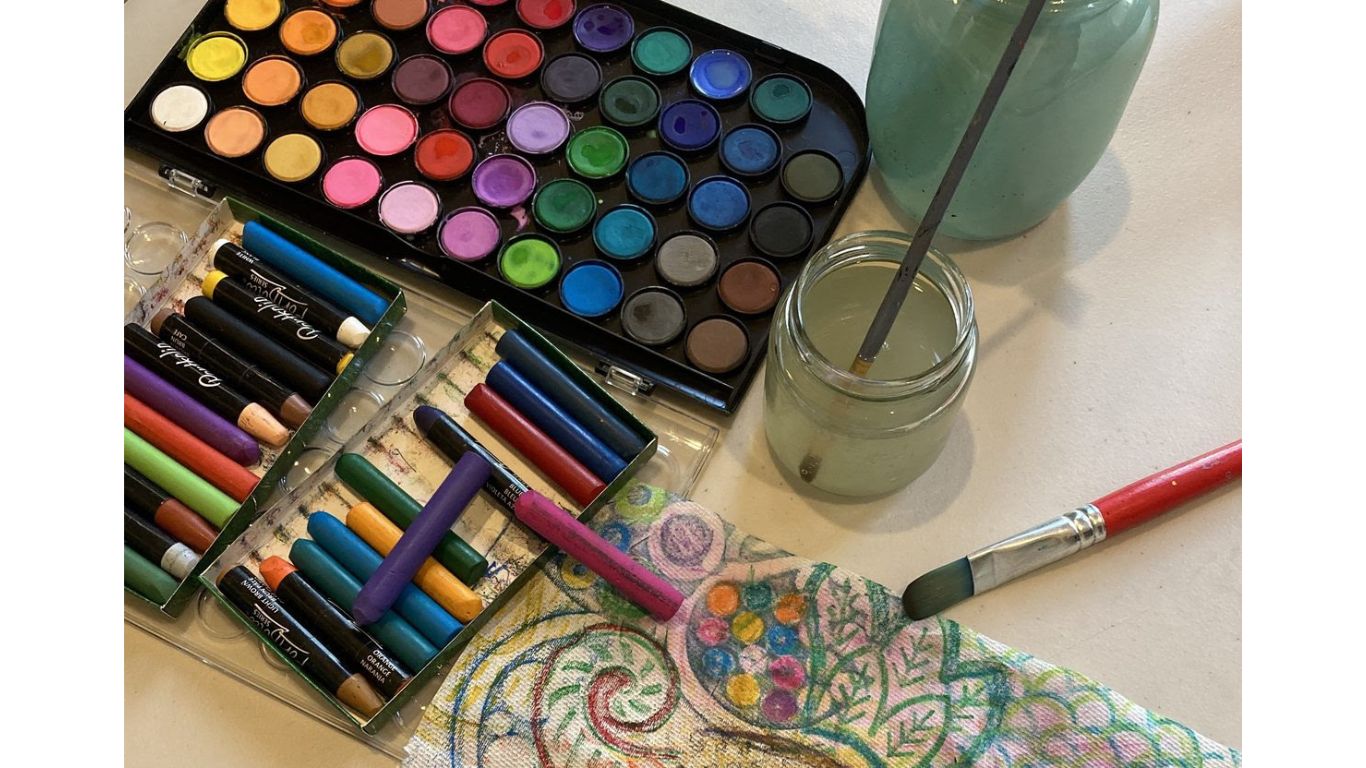
At Cabush, Paul, and Associates there are many traditional therapy options for those patients seeking a traditional approach to treatment. There are also a variety of non-traditional approaches to this form of mental health treatment. As a non-therapist on the administrative side of the practice, I had the pleasure of speaking with Mindy Van Wart, MA about Art Therapy.
Art therapy is a known practice from ancient times through rituals and expressive healing, but was officially coined in the therapy world in 1942. It has recently gained popularity and traction, but is not as understood as traditional therapies. This interview will hopefully shed some light on the practice and impact of art therapy, and how it can be an option for patients who need something extra from their therapy experience.
Defining Art Therapy - The Interview with Mindy Van Wart by Meghan Seeley
Mindy, how do you define art therapy in simple terms, especially for someone who has never heard of it before?
I like to say art therapy is using creative processes to help us get our thoughts and feelings outside of ourselves and onto paper or into a sculpture or something. I think of it as just a visual way of communicating. So, the goal isn’t to make art that’s pretty or you know that anybody else might like. It’s more just giving us a different language to express what’s going on inside and a different way to be honest. I think we can say different things through colors than maybe we can say with words and such. So, it’s just exploring a different angle on what we’re feeling and thinking.
It seems as though Art Therapy is making its way into mainstream media, how do you feel like it’s represented in movies and TV shows?
Honestly, I don’t know that I’ve seen it much in movies and TV shows, but I’m not super up on like current entertainment, so that’s not a fair representation. But I would say the stereotypes I usually hear are people think that it’s just coloring books for adults or it’s just making art in order to relax. I feel like they see it as just one particular way of relaxing. And I feel like it can do a lot more than that. That is absolutely one way we might use it. If somebody just needs to keep their hands busy in order to stay focused on a conversation, then great. Art’s a wonderful way to do that, just to be engaged – to stay focused. We can absolutely use it that way. And we can use it to relax, but also it can really hold a lot of symbolism and a lot of meaning. I think sometimes we might have one idea when we get started making art and then when we’re all done, we’re like, “Wow, that went a different direction than I thought.” Sometimes it’s like the art has its own mind and and it might even surprise us with what we end up expressing or how hard a situation really is when we put it down in a picture rather than just through words and kind of filtering it you know verbally. I even had that thought when I first got into it. I kind of thought maybe art therapy was sort of a lightweight form of therapy. But at this point, I feel like that’s a stereotype that isn’t quite fair. I think it can access parts of our brains and parts of our experience that we just may not even have available if we’re only using words. Especially related with trauma or with experiences that were just stored as visual experiences and weren’t even put into words. We can use it for a lot of different things, but I will say I think it can be a very, very deep way of processing things if people are open to using it in that way.
What inspired you to pursue art therapy as a specialization? And what does a typical session look like?
The first time I went to college I was headed in a very different direction and then some life experiences kind of gave me some interest in becoming a therapist, but it took about 10 years to finally commit to that and go back to school. I just really wasn’t sure that I had the skills for it. For art therapy, the idea of adding the art to the therapy just felt like that’s pretty cool because then it’s not all on me to have the right question or to come up with the next thing to explore. I like to say it’s like the art is a third voice in this conversation that we’re having and it can sort of help me and the client navigate the conversation that we’re having. That was one draw. It felt like it was a support both to me and to clients to have that as a possibility for therapy.
A typical session – that’s really hard because it ends up being very specific to each person. But I would say maybe a typical first session, I start with the offer of a little check-in, like take a little square of paper and fold or rip it in some way that shows how you’re feeling today. So they do something with it and we talk about it and we may then ask well what does that paper need or what would help it, you know, feel supported. And then they make some changes or add something to it so that you know symbolically they’re taking care of the paper and how it’s doing today. Next we might use paper and drawing supplies or we might use Legos or we might use paint. Really anything is fair game in terms of supplies. We would use these chosen supplies to explore different feelings that they have often. Sometimes I’ll have people make a scribble, leave some space in there and then in all of the spaces within the scribble like use a different color to represent some feeling that you have and then we’ll talk about it. With smaller kids, I might just supply like a paper that has a bunch of little circles and we’ll talk about emojis and I’ll ask them to draw me an emoji for every feeling that they have regularly. A common starting place is to explore how they understand their feelings. Navigating what emotions they feel often versus not as often using those colors or photos. This opens up conversations to explore where those feelings happen, what’s going on, and which one do you want to feel more of or which one is okay to talk about with trusted friends and family. It gives us lots of fodder to understand things better. It depends on the person, but sometimes you might use several sessions to make one kind of art piece or something and other people might go through four or five in one session if they’re really, you know, quick and intuitive. So the way that the time flows and how long we might spend on any given project can really vary.
Okay, so do you keep the projects as part of their file or do they get to take any of them home as homework or continued support outside of the sessions?
I always say the artist gets to decide. So, if they want to take it home, they can. If they want to leave it I have a locked up room where I can store things because it is considered private health information. You know ethically I don’t want anybody else to see that unless the client is the one showing them or sharing it. So they might take it home, they might leave it, they might want to crumple it up and throw it away or rip it up. Whatever is the therapeutic thing to do with that project. So that’s always a conversation. It’s like what do you want to happen with this now that you’ve expressed something? Depending on the project and kind of how, you know, how much there is to to revisit or talk about, maybe we run out of time and we want to come back to it next time. We might keep the art or I might take a picture of it and put that, you know, put that in our medical record stuff, too. I do feel like it can for some people be a really cool kind of snapshot of their journey in therapy. It can be a really helpful record for them and for me kind of what’s going on, how things are changing. Another possible project we might do, there’s a process where you take just one canvas and you might use it for months or even a whole year. And so you paint something on it today and next week you come back and you either paint over it completely or you keep some parts of it and paint around that or you add stuff to it. You just keep layering onto it. And so with those, I definitely take a picture every week because you can’t go back and see what you’ve painted over. The way it evolves is really interesting or really tells its own story when you go and look back at the end..
As an art therapist, how do you explain your work to other professionals who might not be familiar with the approach?
I usually start by saying it is therapy. It is counseling and we use art making or creativity as a way to to express and explore what’s going on with a client in more depth. Another misconception is that it’s only for kids and I really really don’t think that’s true. I think anybody who’s willing to try it out or to try to express themselves creatively can get a lot out of it. It’s really just a matter of willingness. It’s not skill, it’s not age, it’s just openness to trying it. If I’m really trying to make a case for it, I talk a little bit more about neurobiology and just how we’re starting to understand that more and to realize that if we only use verbal channels, we can only touch on certain things. Art therapy uses more of our whole brain and and more of our body,it gets hands and arms involved in the process, too. All of that can help us kind of both reflect and express feelings and thoughts.
It was touched on a bit before, but how do you integrate traditional talk therapy techniques mixed with the art making process and how do you balance the focus between when they’re being creative and when you’re trying to get a verbal response?
I would say most people are more comfortable talking just because that’s more familiar. So often we will start there. With simple and easy questions: How’s your day going? How’s your week going? What’s happened since I saw you last? And then if there’s some topic or some theme or something that seems really important, we might use the art to explore that more specifically or focus on that for the session. This also works for a dilemma that they’re facing. We just use the art as a way to kind of zoom in, see a little deeper. Some people want to be working on something the whole time even if it’s not directly related to what we’re talking about. Some people feel like I want to get things out in the art first and then leave time to kind of discuss it or or talk about it at the end. I think sometimes with parents in particular, they feel like the real therapy is the talking portion and the art is just kind of a sideline. I feel like anyway that our brain and heart are chewing on things and trying to understand and trying to express it, whether those words ever get expressed to me or to the parents, the work is happening inside that person. A discussion doesn’t necessarily need to happen each session if it doesn’t fit.
What would you feel is the biggest hurdle when starting this kind of therapy? Do you think that preconceived notions of how it’s perceived in the broader spectrum is something that you have to get over with patients and families and parents in the first few sessions?
Definitely. I would say it often falls into one of two categories. Either there’s somebody who would say, “I’m not artistic or I’m not an artist” and so and so they’re just kind of turned off to it or or it’s like it’s a scary risky thing to put yourself out there in a visual way. The other category would be people who are super artistic but who mainly focus on making things look just right. And so perfectionism or technique can get in the way of actually expressing what they feel and think because they’re looking at it more aesthetically and less as a way to communicate. I feel like so far those are the two main hurdles I see and to varying degrees we can work through that or work towards using art in a way that’s more helpful to them.
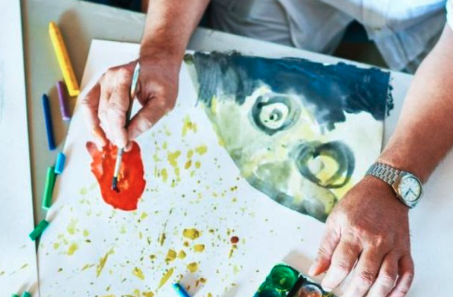
Art Therapy: Techniques and Interpretation
Are there certain colors, shapes, or images that you’re able to interpret into a meaning that’s across the board. For example the color red, if it’s being used a lot, does it mean something? Or does the color black if it’s used a lot mean something? And how do you use those interpretations to then guide the conversation?
Yeah, that’s I would say a hotly debated one because colors can mean different things culturally, or or even just personally. Let’s say I love red. Everybody else thinks that’s a color for anger, but for me that’s like a color for happiness, something positive. So, I would say in our field they really try to encourage us to prevent ourselves from assigning meanings to things and really listening well to what the client sees in it. I would say if there’s any place to interpret things, it might be in sort of how you approach the process more than what you actually draw or make.
How do you, Mindy, measure a client’s progress or the effectiveness of art therapy?
Beyond specific goals that a person might be working on and if there’s progress with those goals, in general more playfulness, more curiosity, more willingness to experiment with things are all good indicators that at least they’re feeling comfortable in therapy and more likely to make use of it and be engaged.
I don’t know that I have any specific ways to measure the effectiveness. I think just if a particular client finds it’s a meaningful way to express what they’re trying to express. Or if at the beginning of a session there’s something churning and at the end they’re at the very least feeling understood – if there’s some change in how they feel either from just engaging in the process or being witnessed in what they’re saying and doing. Feeling more connected with themselves in the course of a session is a good sign.
What types of clients or emotional issues respond particularly well to art therapy?
I would say from my experience, I think some places where it feels especially useful are for folks who are on the spectrum or who for any other reason find verbalizing things a little bit challenging. If they’re open to it or if they’re if they enjoy being creative at all, using art to show how they feel about a situation or what it’s like to be in school or to be bullied, that can be really meaningful. They have a “finally this message that I’ve been trying to get across – finally somebody’s hearing what I’m actually saying” moment. I feel that’s one place where it can be really meaningful. I also feel folks who have ADHD that are open to being creative have a very special kind of intuition and they can connect the dots between a question and a visual metaphor to show it very quickly. There’s something really special about folks who have ADHD. If they’re open to the process, they can say some really cool things. Art can be as fast and intuitive as their brain is working.
Do you feel like art therapy is something for patients that just want a therapist, there is no necessary goal or situation to overcome?
Yes, absolutely. Just to be listened to or just to get clearer for themselves, to have somebody else to bounce ideas off of. Absolutely. Yeah. Art therapy is one of many, you know, great ways to do that in my book.
How do you maintain your own personal relationship with creating art as a form of self-care or self-expression?
I do have a little art journal where if I’m really on track, once a week, I’m making some art that reflects on the clients I’ve seen that week and how I’m feeling or doing in life in general. Realistically, I use it more when there’s something that I’m not quite sure what to do with or a red flag that’s coming up. I might be using it just to kind of process my own stuff a little bit. I also still meet with a couple of friends from grad school. Once a month we meet and each have one of those ongoing paintings. We paint and talk for a while and then we reflect on what’s changed since we started today to you know when the time’s over. So we’re doing that together, just to still be using what we’re offering to our clients.
Final Thoughts
Art therapy plays an essential role in holistic mental health. Whether you are an experienced artist or someone simply looking for a new way to process complex feelings, the therapeutic power of art is accessible to all. We encourage you to explore your own creative outlets as we continue to support one another in health and healing. Thank you, Mindy, for showing us one path forward.